
Xavier Alexander has been in coffee for over 25 years. He started at Starbucks in Orlando in the late '90s, working shifts to fund his real goal: being a touring musician. Bands didn't work out. Coffee did.
By 2002, he'd caught the roasting bug. He was the friend in the group who wouldn't shut up about freshly roasted beans, about small local roasters, about the gospel of freshness. A decade later, he was roasting manager at Intelligentsia in Chicago, overseeing 15,000 to 25,000 pounds of coffee a day on 90-kilo roasters.
It was a big operation. It wasn't his.
Brick by Brick
Around 2010, Alexander met Darko, who owned a café called Café Streets. Darko was one of the first multi-roasters in Chicago, bringing in young West Coast companies like Heart, Verve, and Four Barrel before anyone else knew who they were. He wasn't chasing hype. He was chasing quality.
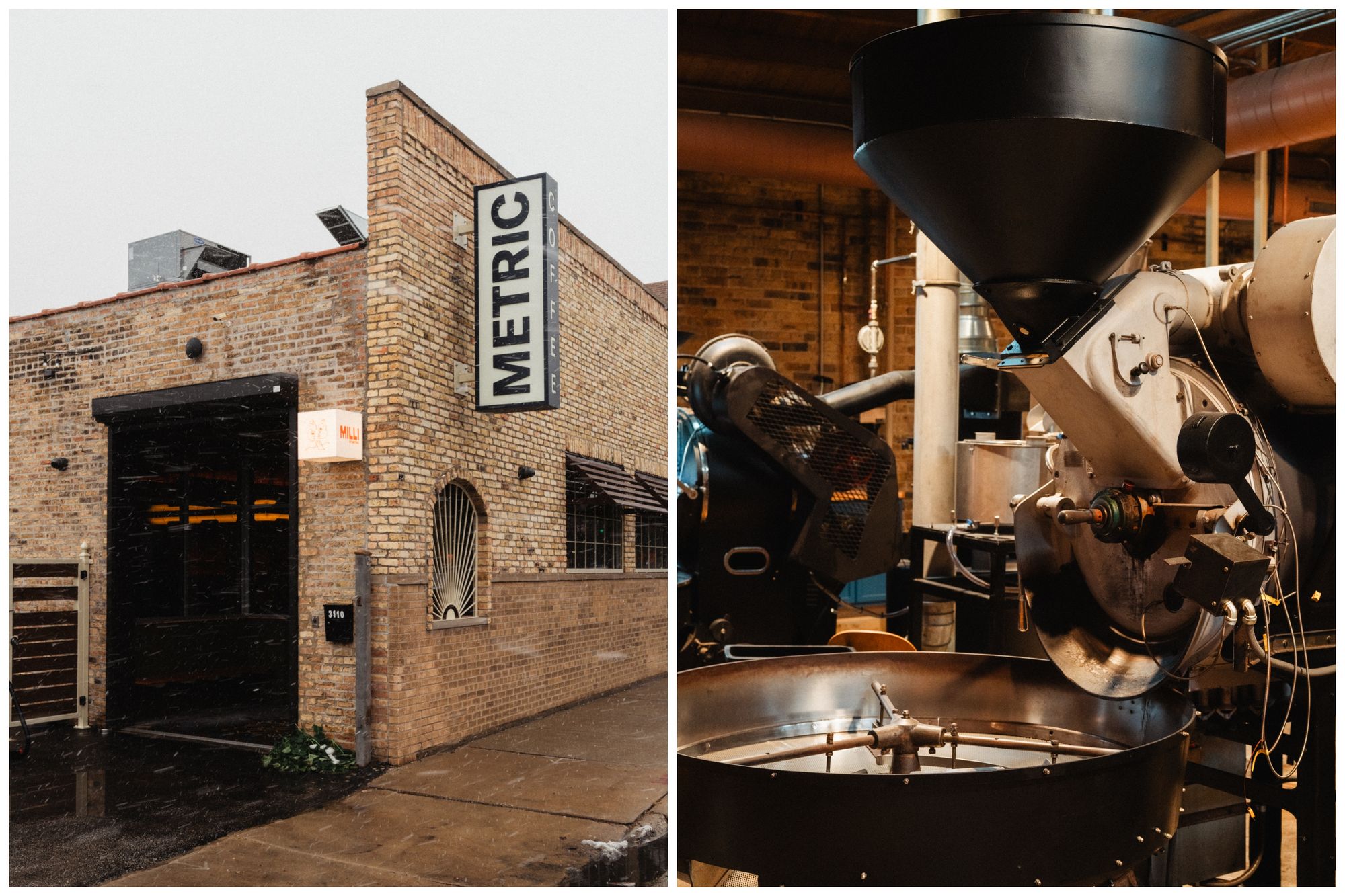
They grabbed a beer. They talked about doing their own thing. Alexander had the roasting chops. Darko had the café. They bought a roaster, moonlighted for a year while Alexander kept his day job, and launched Metric in 2013 out of a garage in the middle of nowhere.
The model from day one: buy a bag of coffee, sell it, buy three more. No investors. No board. No outside funding. Just two people building something piece by piece.
"We are DIY, we're independent, we're more punk rock in that sense," Alexander says. "Optically, people look at our brand and they're not able to assess that based on the way we brand and promote. But we're really proud of being what is by definition truly independent."
A Decade of Long Days
Independence came at a cost. No funding meant no money. Alexander has a wife and three kids. Building Metric meant long days, longer nights, time away from family, and the kind of internal battles that don't make it into brand stories.
"It's been successful and it's been joyous to some degree," he says, "but it's also been really hard. Incredibly difficult."
The original café wasn't world-class. It wasn't meant to be. The vision was always longer: build a foundation, buy a warehouse, do it right. That took over a decade.
In 2016, they opened a 400-square-foot walk-up café at the corner of their roastery in Chicago's West Town. Customers could watch production through a glass divider. It was small, considered, and built with their own hands.
Then came Milli.
Milli
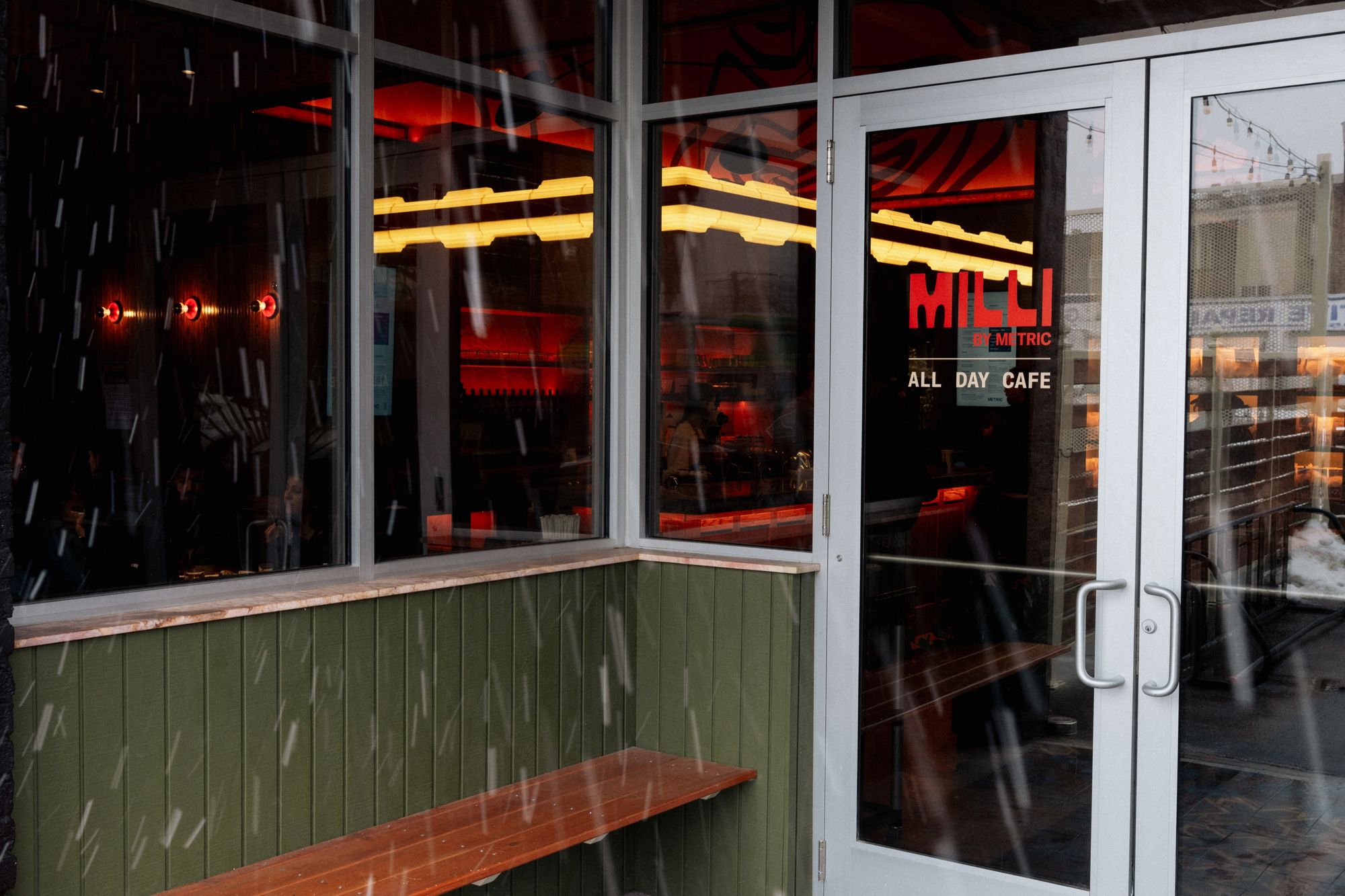
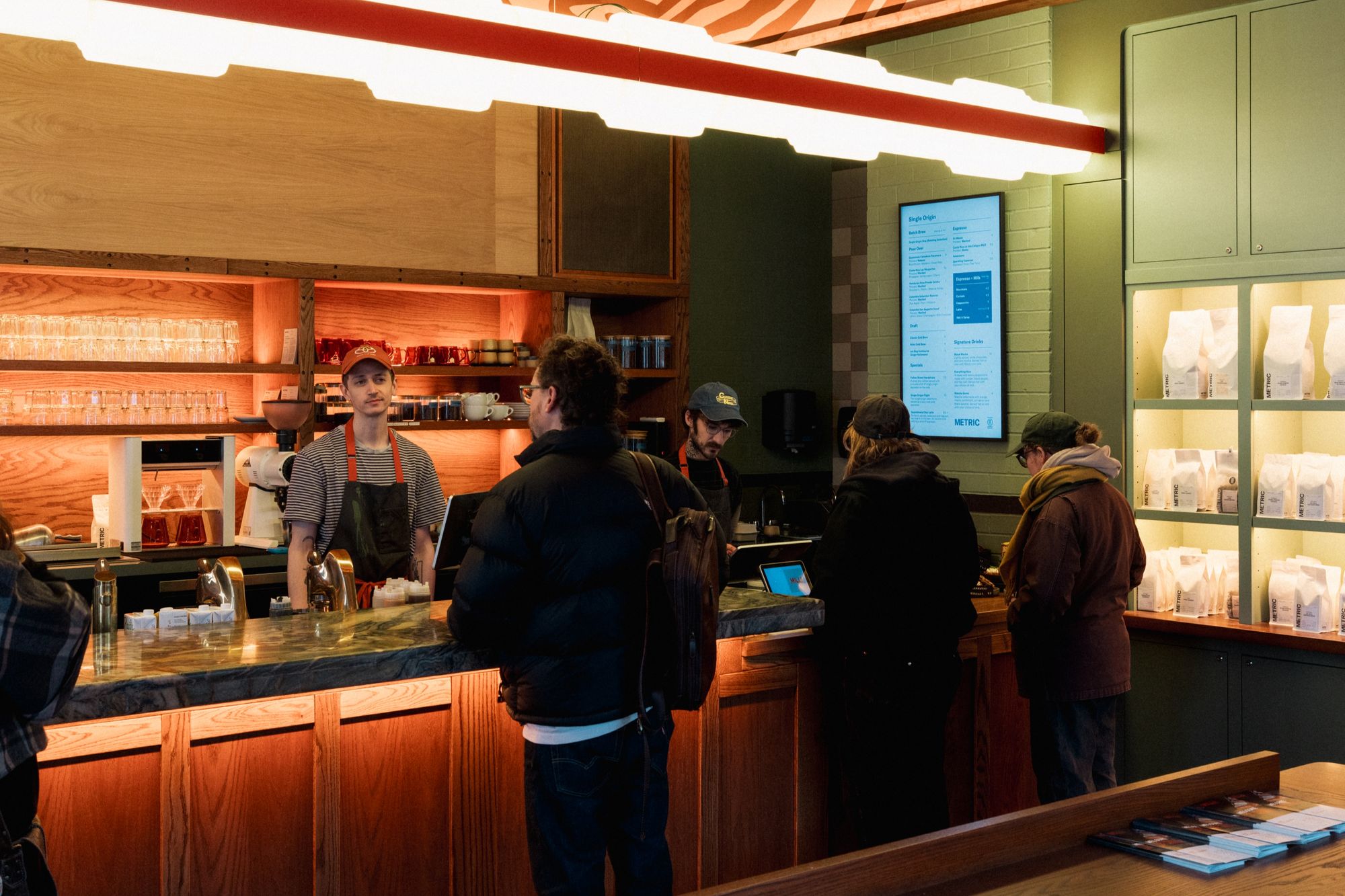
Milli is the new spot. An all-day café and bakery in Avondale, serving specialty coffee, pastries, seasonal food, and a curated wine list. It sits inside a warehouse that Metric now owns.
They bought the building with an SBA loan. They built it out themselves. Darko, who handles design and project management, designed the entire space. The buildout took three years because they couldn't afford to rush it. Most people flip a space in eight months. Metric did it on their own timeline, with their own money, brick by brick.
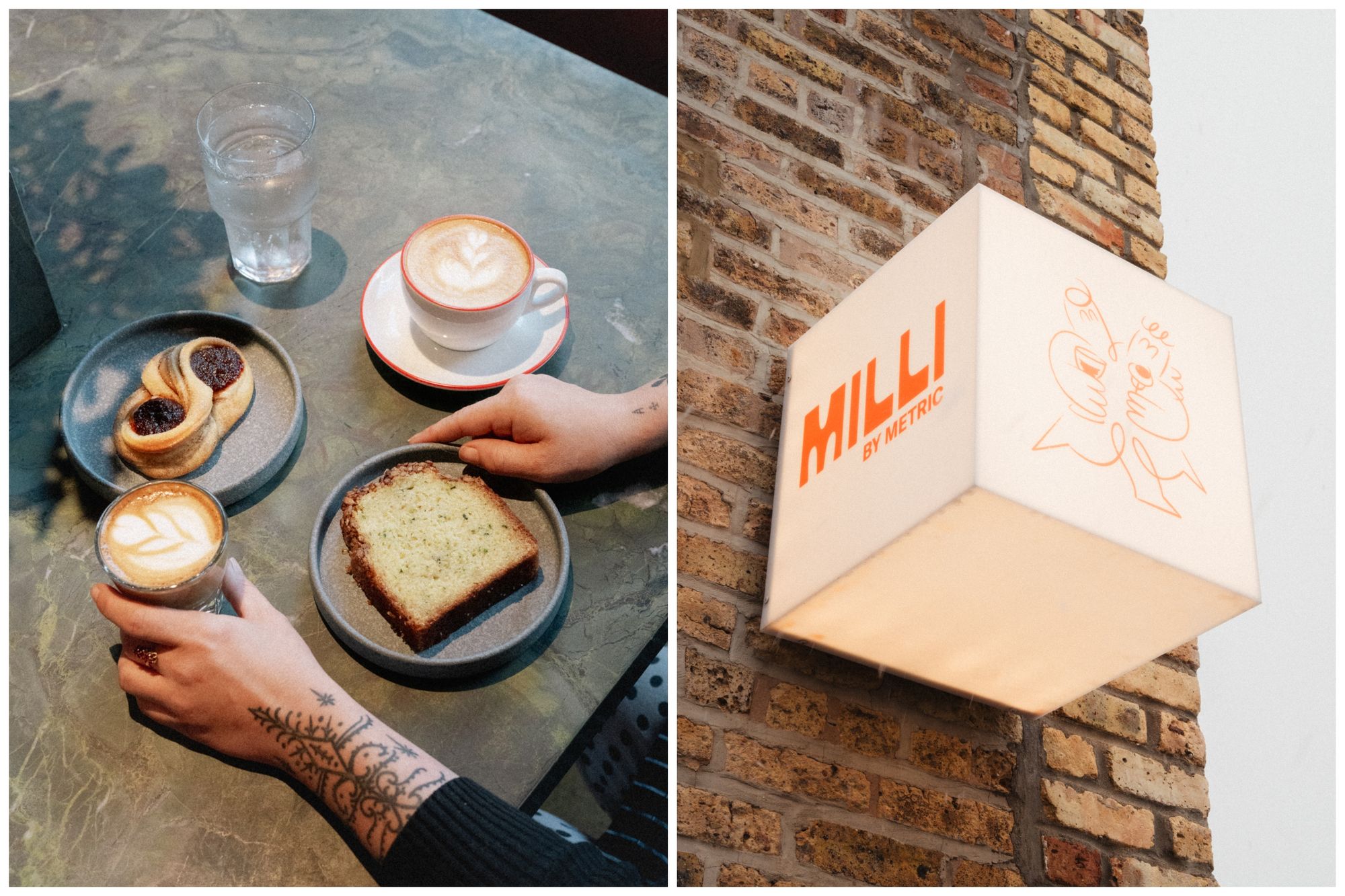
"My business partner Darko is really well-versed in all aspects of planning to project management to design," Alexander says. "He himself designed the entire space. We're quite proud of that."
The result is a space that looks like it came from a well-funded operation. It didn't. It came from a decade of saying no to shortcuts.
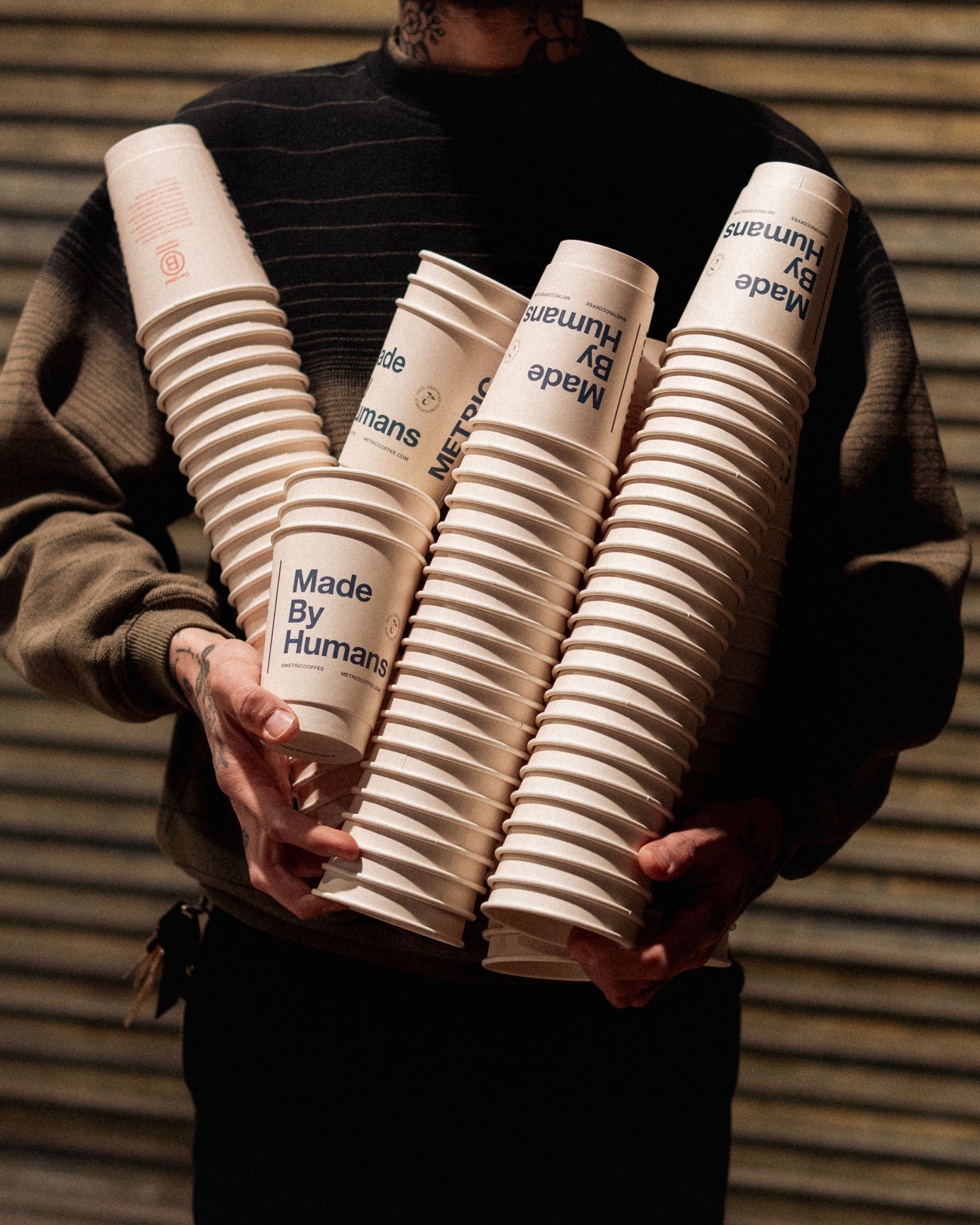
Made by Humans
The tagline came from Tim Breen, a designer who used to work at Intelligentsia. When Metric was figuring out its brand identity, Breen suggested it: made by humans.
They ran with it. Then, for a while, they stepped back. It felt obvious. Some people cracked jokes. But the older Alexander gets, the more he leans into it.
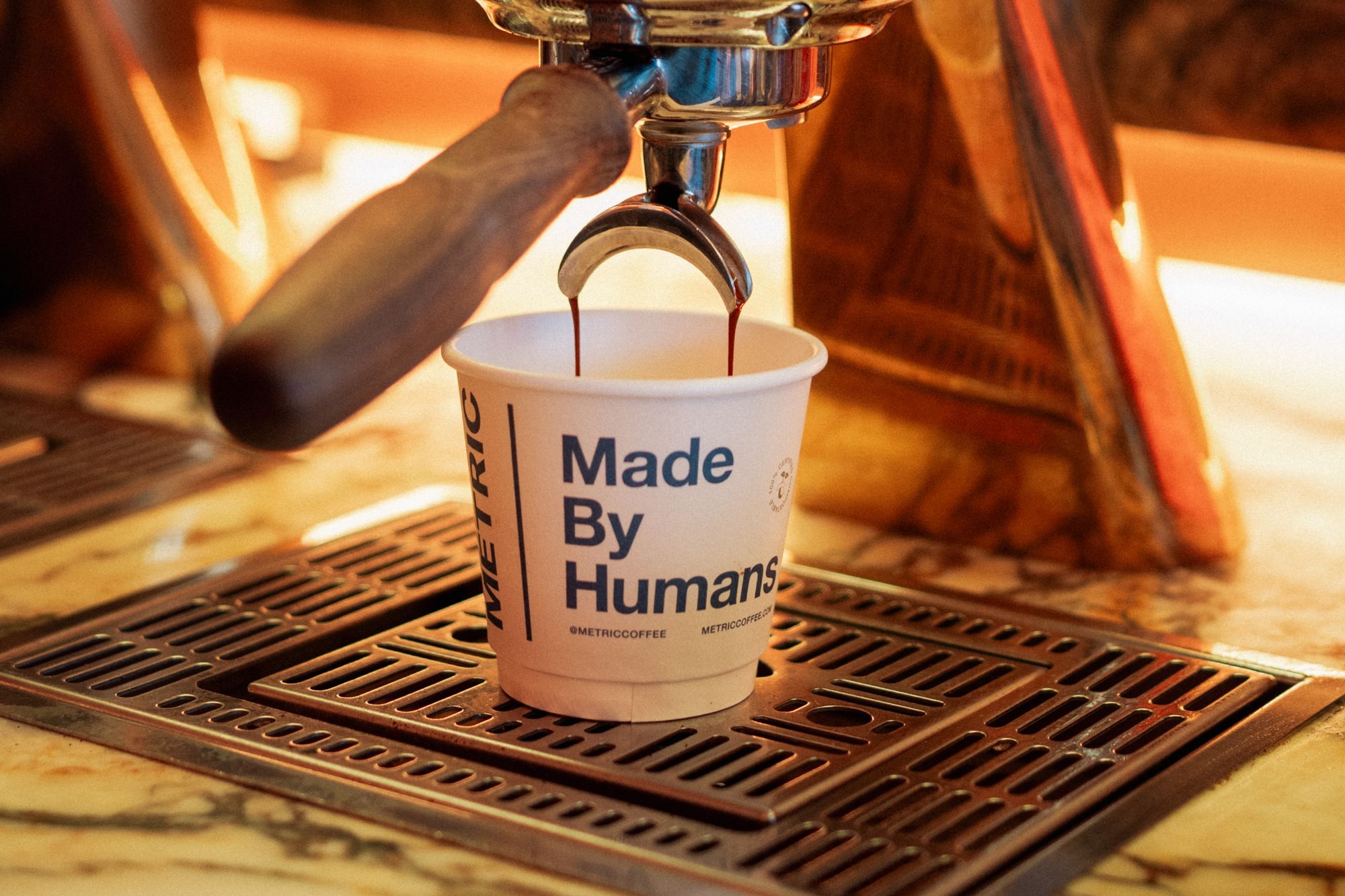
"In a world of AI, in a world of digital media and getting overloaded with information and marketing, I think that reminder of 'this was made by humans' will always stand," he says.
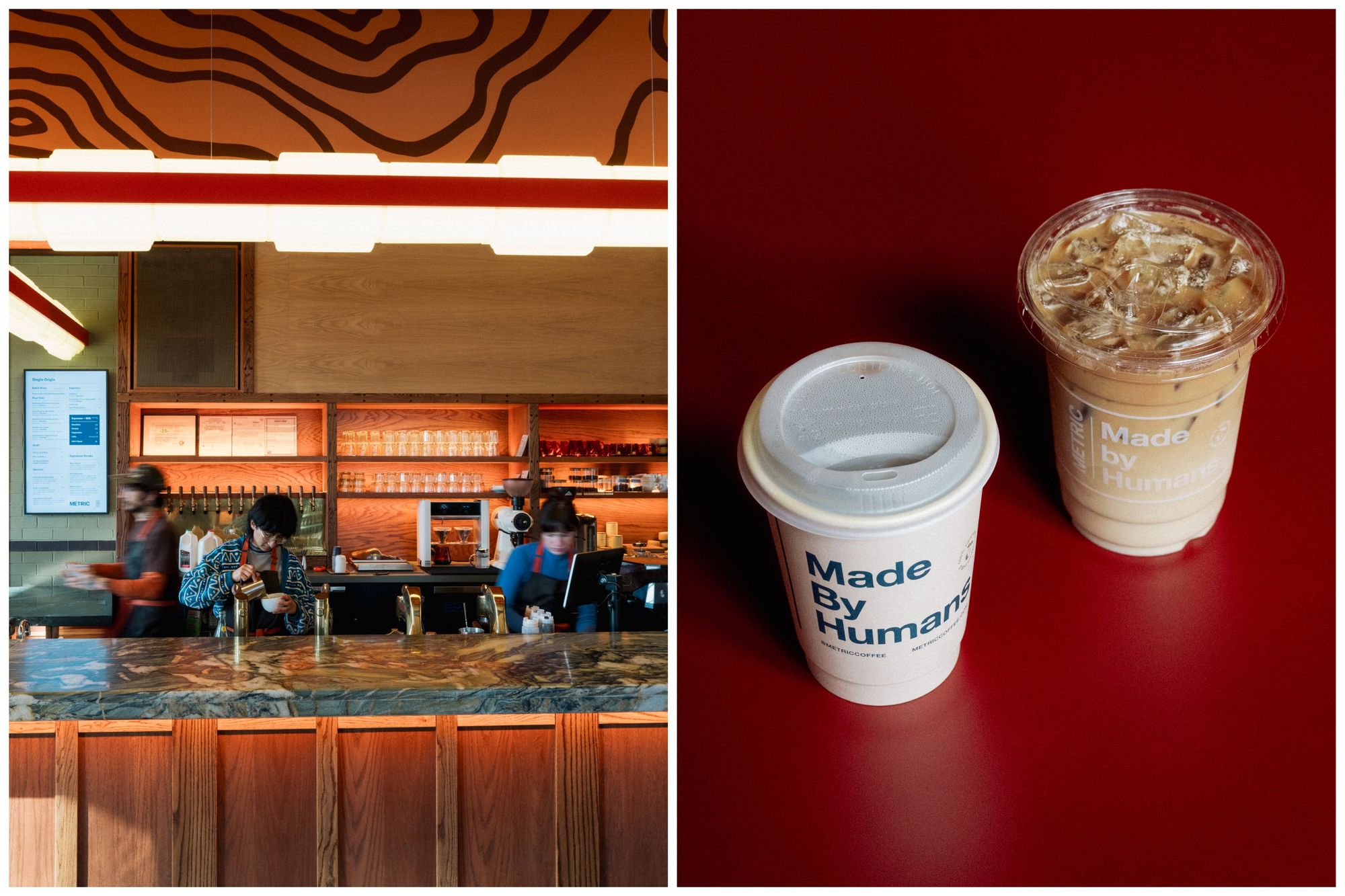
It shows up on the coffee cups. On the tumblers. On the packaging. It's not a slogan. It's a statement of fact about how the company operates.
The Only One in Illinois
Metric is the only BCorp certified coffee roaster in Illinois. That's not a brag. It's a tool.
Alexander pursued certification after meeting other local BCorp companies and being impressed by their attention to culture, benefits, and accountability. BCorp gave Metric a framework: benchmarks to hit, guidelines to follow, a third party with no stake in the business verifying how they operate.
"You don't need to be certified BCorp to do this," Alexander says. "You can do all this regardless of the certification. But what it does is it is a third party that is vetting the way you do business."
Their score isn't the highest. There are tech companies with indoor gyms and nanny services hitting 120 points. Metric isn't there yet. They invested everything into infrastructure. The next phase is systems, materials, people.
Rome wasn't built in a day. Neither was Metric.
What Belongs Here
The front-of-house manager at Milli, Mo, said something recently that stuck with Alexander. They were doing wine tastings, and Mo said: "There's not a single wine that shouldn't be here."
Alexander thinks about coffee the same way. There's not a single coffee that shouldn't be here. They're taste makers. They chose every bean because they love it and know the customer will too. The same applies to pastries, wine, everything on the menu.
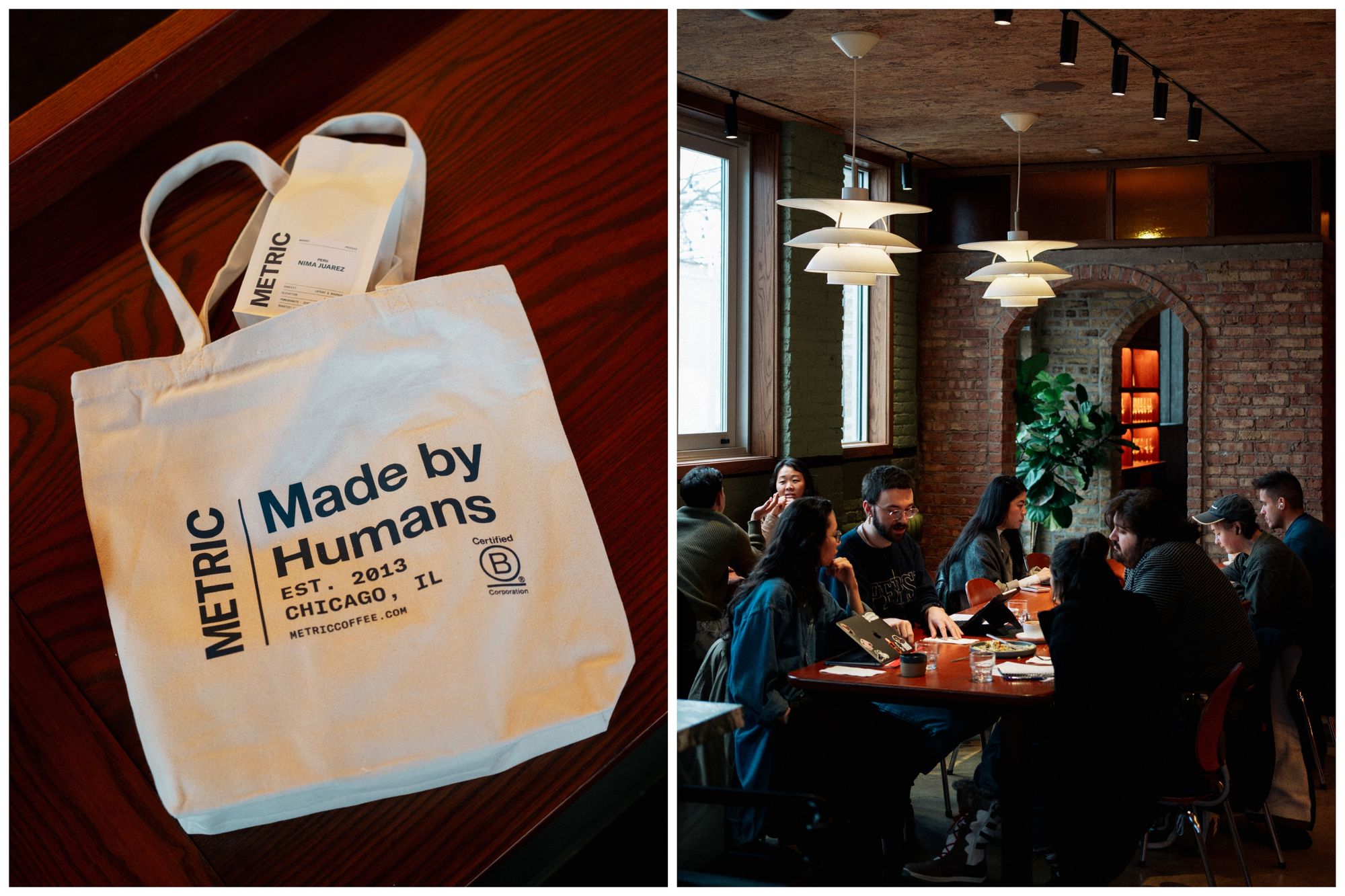
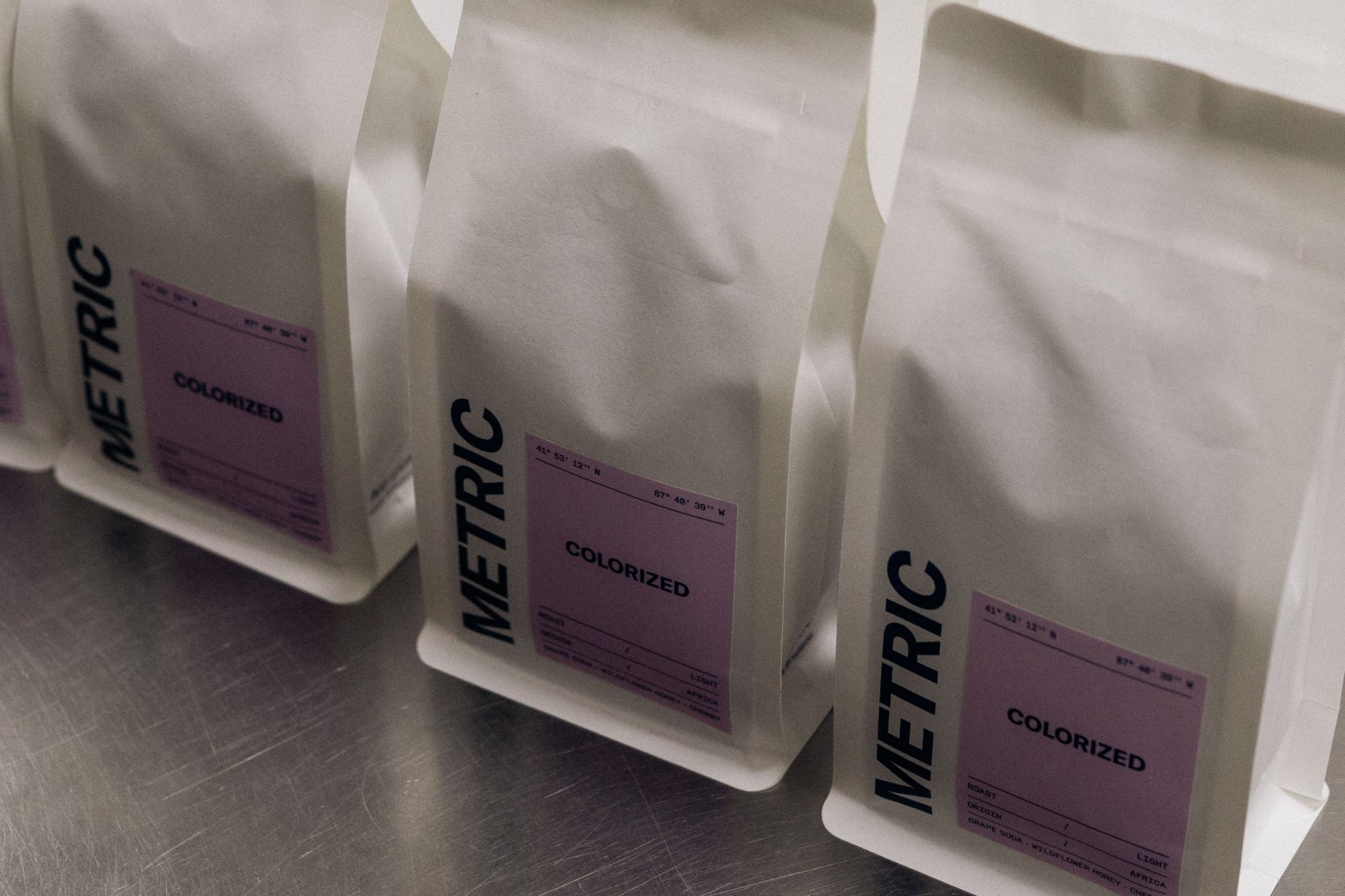
"Whatever it means to them to say sustainably, there is some sustainability factors applied to the packaging and the production," Alexander says. "What we do here isn't cheap and it's not intended to be cheap."
The goal is simple: when someone holds a bag of Metric coffee or steps into Milli, it should feel good. Truly good. Made by humans who give a damn.